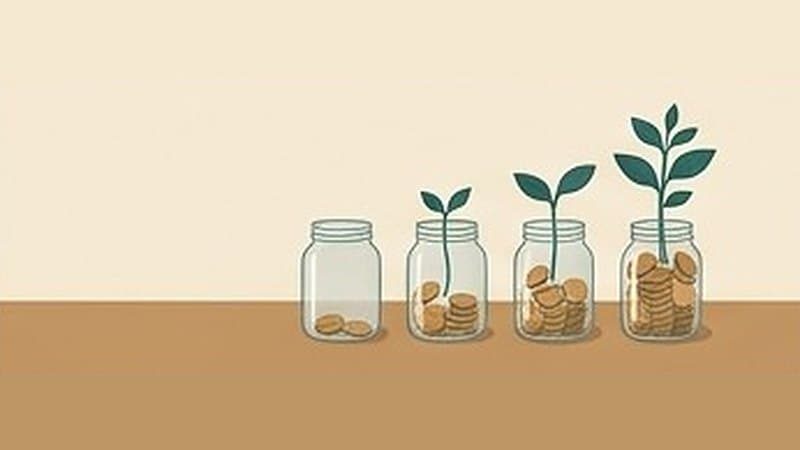
Compound interest is the closest thing money has to a superpower, and it works best for people with the most time. That's you. This lesson shows how it works and why starting early makes such a big difference.
Interest on your interest
When you save money in an account that pays interest, you earn a little extra. With compound interest, that extra starts earning interest too.
Put $1,000 somewhere that earns 5% a year. After one year you have $1,050. In year two you earn 5% on $1,050, not $1,000, so you end at $1,102.50. Leave it for ten years and it grows to about $1,629, without you adding anything.
A handy shortcut is the Rule of 72: divide 72 by the interest rate to estimate how many years it takes to double. At 5%, that's 72 ÷ 5, about 14 years.
Why starting early matters so much
Here's an example with estimated figures. Two people each save $50 a month and earn 5% a year until age 65.
| Starts at 16 | Starts at 26 | |
|---|---|---|
| Total put in | $29,400 | $23,400 |
| Value at 65 | about $126,000 | about $72,000 |
The early starter put in only $6,000 more but ends up with about $54,000 more. Those first ten years of growth keep compounding for decades.
It's even more striking the other way round. Someone who saves $50 a month only from 16 to 26, then stops completely, puts in $6,000. Left alone at 5%, it grows to about $54,000 by 65.
Try it
Start at 16 or start at 26?
Two people save the same amount every month until 65. One starts ten years earlier. Change the amount and the rate.
Start at 16: value at 65
$126,354
put in $29,400
Start at 26: value at 65
$72,003
put in $23,400
- Starts at 16
- Starts at 26
A word about the 5%
The 5% in these examples is just an example, not a promise. A high-interest savings account is safe but usually pays less. Investments like stock funds have historically earned more over long periods, but their value goes up and down, and they can lose money, especially over a few years. Money you'll need soon usually belongs somewhere safe.
Where to save
A savings account at a bank or credit union is a good start, and many have accounts with no fees for students.
Once you turn 18, you can open a Tax-Free Savings Account (TFSA). Anything you earn inside it, interest or investment growth, isn't taxed, even when you take it out. Room to contribute builds up every year from the year you turn 18, around $7,000 a year recently, and unused room carries forward.
At 18 you can also open a First Home Savings Account (FHSA) if you think you might buy a home one day. The adult lesson on buying a first home explains how it works.
Emergency money first
Before saving for the long term, it helps to have a small cushion for surprises: a phone repair, a bus pass, a lost job. Having that money means you won't have to borrow when something goes wrong.
Compounding works the other way too
The same maths that grows savings also grows debt. A credit card balance compounds against you, at a much higher rate. That's the next lesson.
Worked figures are estimates based on the example inputs shown, checked October 11, 2026. Rates, rules and lender policies change, and your own numbers will differ. This is educational information, not financial advice.