A credit card can be the cheapest way to borrow or one of the most expensive, depending entirely on one habit. Understanding how the interest works makes it clear why.
The grace period
When you make a purchase, it shows up on your next statement. If you pay that full statement balance by the due date, Canadian rules give you an interest-free grace period of at least 21 days on new purchases. Used that way, a card costs nothing in interest at all.
The grace period usually disappears the moment you carry a balance. Then interest is charged on the unpaid amount and, in most cases, on new purchases from the day you make them, until the balance is cleared in full.
Cash advances are different. They typically have no grace period, start costing interest the day you take them, often at a higher rate, and may carry a fee on top.
How the interest adds up
Most Canadian cards charge somewhere around 20% to 30% a year. The interest is calculated daily, but a monthly estimate is simple: the annual rate divided by 12.
On a $5,000 balance at 20.99%, that's about $87 a month, or roughly $1,050 a year, just to stand still.
Compare that with the mortgage in the first lesson: at 4.25%, the same $5,000 would cost about $18 a month. Same amount, around five times the price.
The minimum payment trap
Your statement shows a minimum payment. On many cards it's a small percentage of the balance, with a floor of about $10. Your statement also has to show an estimate of how long the balance would take to clear at the minimum, and it's worth reading.
Here's why it's so long. Take that $5,000 at 20.99%, on an example card whose minimum is 3% of the balance, and assume no new spending. These are estimates.
| Monthly payment | Time to pay off | Total interest |
|---|---|---|
| 3% minimum (starts at $150, then shrinks) | about 21 years | about $6,400 |
| A steady $150 | about 4¼ years | about $2,600 |
| A steady $250 | about 2 years | about $1,200 |
The first two rows start at exactly the same payment. The difference is that the minimum shrinks as the balance shrinks, so each month less of it reaches the principal. Keeping the payment level, even at the same starting amount, takes about 17 years off.
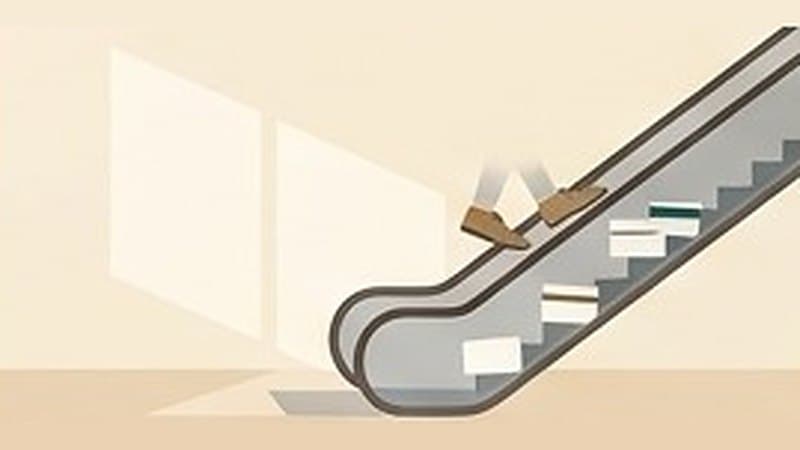
It's a bit like walking up a down escalator. Walk at a steady pace and you reach the top. Slow down a little every step and you can be on it for a very long time.
Try it
The minimum payment versus a steady one
$5,000 at 20.99%, no new spending. The amber line pays the 3% minimum, which shrinks as the balance does. The teal line keeps paying the same amount every month.
3% minimum
21 yr 5 mo
$6,434 interest
Steady $150
4 yr 3 mo
$2,568 interest
- 3% minimum
- Steady $150 a month
A few details worth knowing
When you pay more than the minimum, federal rules for banks require the extra to go to your highest-interest balances first, or be spread across them proportionally. A missed payment can trigger a higher penalty rate on some cards, and it's reported to the credit bureaus, which the credit scores lesson covers. And the interest rate isn't always fixed for life: it's worth checking your cardholder agreement for when it can change.
Where to go next
Knowing how the interest works is half of it. The next lesson looks at ways to actually pay down a balance, and what consolidation does and doesn't change.
Worked figures are estimates based on the example inputs shown, checked October 11, 2026. Rates, rules and lender policies change, and your own numbers will differ. This is educational information, not financial advice.